
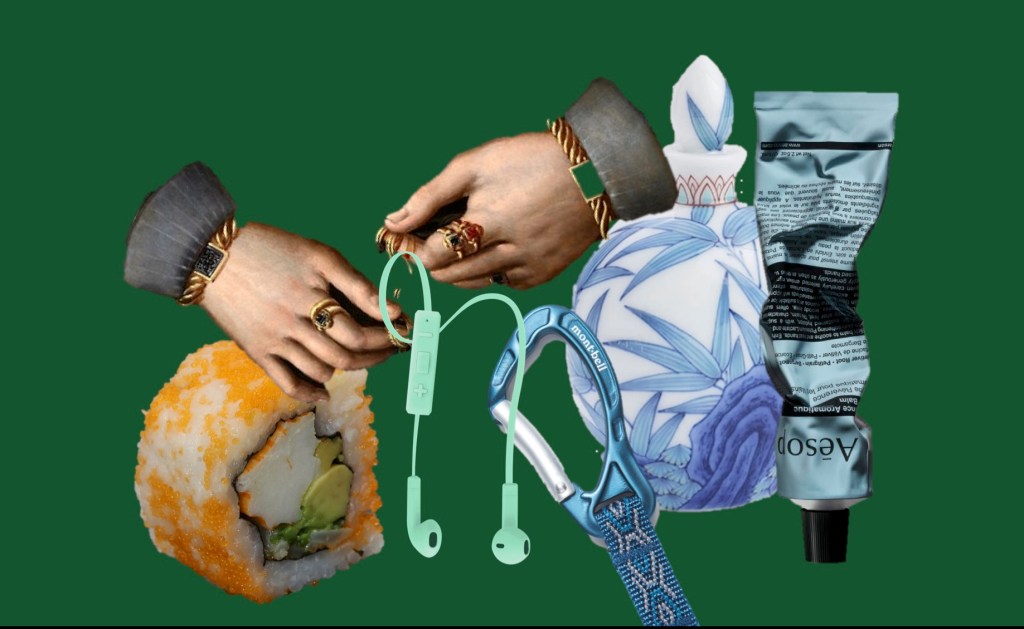
Thoughts on comfort goods, indulgence and guilt.
You find a high-tech, heat-tech, all-things-utility outdoor jacket. You will wear it, not through a mountain range, not this year, but you will wear it under a bus stop roof in winter and it will feel like a nylon womb of warmth. Apple & date artisan crackers. A surprisingly good shampoo with an undefinably good scent. Sooner or later, the shop stops stocking that brand of crackers, another business goes bankrupt and the shampoo eventually disappears from the market.
As if life was not tricky enough, there come moments when loyalty breaks, products are discontinued and recipes are modified. You feel sad for a moment. Then your defensive contempt of material possessions kicks in to mask it – “I don’t actually need it”. But you do. It’s a specific range of treats and services that I’m referring to – not the ones Veblen wrote about. Veblen famously coined the term “conspicuous consumption” in 1899. The leisure class of his time has been expanded since, but the principle is the same. Besides utility, consumption of certain goods over others is a display of status – and if not of wealth status exclusively, then also of identity. Airpods, Dualit toasters, a Harley, a Tom Dixon lamp. Putting this category of “conspicuous” items on the side, I want to talk about those that do not necessarily qualify as high-end or identity-setting.
A good shampoo will be smelled by others but few will enter your shower to see the bottle. The shampoo’s value is what you feel it does to your hair compared to others. The apple & date crackers are artisan. This inflates your sense of virtue, “It’s handcrafted”, “It’s local” but none of your friends care. You’re happy to eat them by yourself on a Monday night. Heirloom tomatoes. They’re the next level of summer tomatoes – plump and pricey, mixed with good olive oil, their flavour beats the rest. You happily pay their price for yourself and those at dinner. ‘Conspicuous’ or not, some products are central to our routine and sense of comfort.
We are sensory beings. Religions recognised this before marketing practitioners. Water, gemstones, certain metals, textiles, scrolls, adornments. In Christianity, bread and wine are transubstantiated into Christ’s flesh and blood. The spiritual significance of jewellery, from Hindu tradition to Native American tribes has hundreds of thousands of historical sources around it. Gold and jade were assigned metaphysical meaning. They are rare and visually pleasing. Manufactured goods have less obvious meanings. But like gemstones and paintings of deities, travel souvenirs from cheap materials can be equally evocative.
The problem is that our attachment to material things is spoken about as a corruption of our time when past periods witnessed the same motivations behind acquiring goods. People went as far as to raid and steal. The Crusaders looted. The British justify their theft of artifacts by arguing that their museums at a better capacity to preserve objects of world significance. Industrial production evolved, so we have much more sophisticated and affordable merchandise, but that does not mean consumerism today reveals something profound or terribly worrying about our condition. We do consume in excess. Too much meat, too much clothing, too much plastic. This needs to change, but so does our critique of indulgence. Ideas materialise in personal objects. People close to us associate them with our name, our smell and our quirks. There’s an instinctive need to decorate space and time, to attribute memory to objects and relate to personal belongings or find solace in ephemera.
On a windy day, getting frustrated for something out-of-stock online or at the corner shop is not a pitiable state – proof of our modern Western decadence. It is a decent reaction to the let-down of putting your hopes for the day on a lambswool sweater, candle or quesadilla maker. Sometimes talking to a friend or saying a prayer just doesn’t cut it. We create atmosphere by material means, wear accessories and get bored of them, find nostalgia in our grandmother’s pricey perfume. Worldly delights are good. Guilt is bad. “Guilt is nature’s Adderall”.
 Folding Laundry
Leave a comment